WUXI RUIEN TECHNOLOGY CO.,LTD

The differences between linear guides and hard rails of CNC machine tools
Release time:
Aug 22,2025
Discover the key differences between linear guides and hard rails in CNC machine tools. Learn how WUXI RUIEN can help you choose the right solution for your machining needs.
CNC machine tools are important equipment in modern manufacturing, providing reliable guarantees for achieving high-precision, high-efficiency, and highly automated production. Among CNC machine tools, the guide rail is an important component, directly related to the machining accuracy and stability of the machine tool. Currently, the market mainly divides guide rails into two types: linear guides and hard rails. This article will elaborate in detail on the characteristics, advantages and disadvantages, selection, and application of these two types of guide rails.
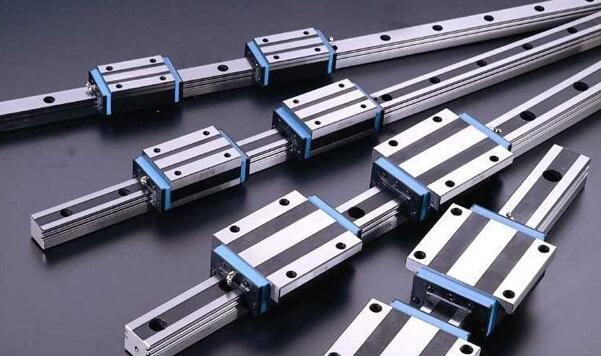
I. The Differences Between Linear Rails and Hard Rails
- Characteristics of Linear Rails
Linear rails achieve motion by having balls or rollers slide within the track, and use return springs to maintain a tight contact state of the trajectory. Linear rails have low friction during processing and exhibit good wear resistance when frequently changing positions and subjected to minor impacts. - Characteristics of Hard Rails
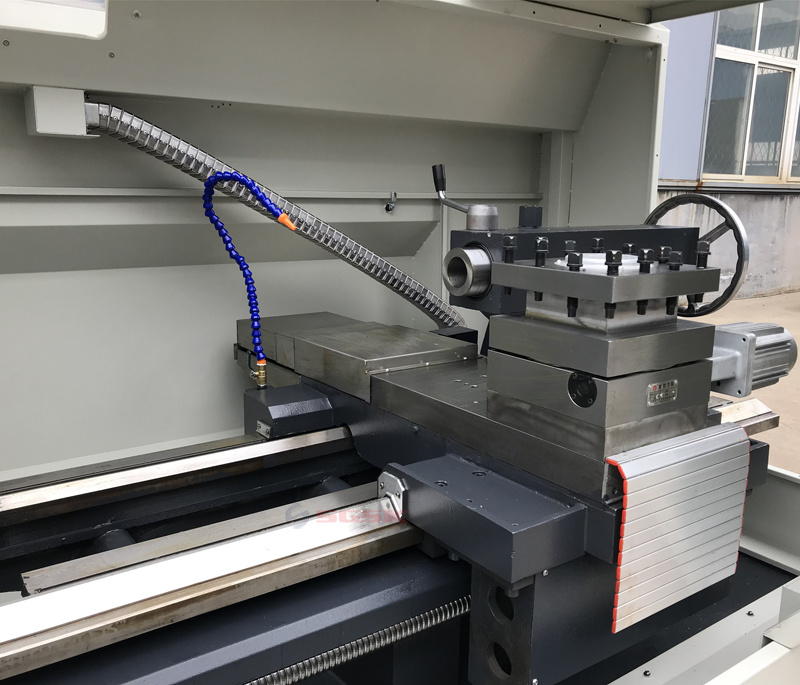
The movement of hard rails is achieved through planar sliders on the surface of hard tracks, offering excellent static and dynamic rigidity. The superior creep resistance and self-lubricating properties of hard rails make them suitable for long-term high-speed and heavy-load industrial production, as well as for high-precision processing of medium and small-sized parts.
II. Selection of Linear Rails and Hard Rails
- Selection of the Applicable Scenarios for Linear Rails
Linear rails are mainly suitable for machining with relatively low speeds and not very high precision requirements. For this type of processing, ball linear guides are generally used. Due to their simple structure and relatively low cost, they offer advantages such as high precision and good rigidity, and are widely used in metal processing, such as casting, turning, drilling, grinding, etc. - The applicable scenarios for choosing hard rails
Hard rails are suitable for machine tools with high speed, heavy load and large cutting force, such as vertical machining centers and gantry machining centers. Hard rails are made of high-strength steel, which have high strength, large rigidity, can withstand large loads, high precision and long service life. They are suitable for high-precision processing, such as continuous five-axis CNC machining centers with processing accuracy below 0.002mm, which require more stable and rigid hard rails.
III. Advantages and Disadvantages of Linear Rails and Hard Rails
- Advantages of linear guides:
(1) Small contact area between the track and the guide rail, ensuring smooth operation of the machine tool.
(2) Easy to install and maintain, it can be equipped with automatic and semi-automatic devices.
(3) The vibration requirements for the machine tool are not high, and the difficulty of machine design is relatively small. - Disadvantages of linear guides
(1) The precision of linear guides is not as good as that of hard rails, and they are suitable for low-precision processing.
(2) The wear of the linear guide rails is relatively severe, and their service life is short under high-speed and high-load conditions, requiring replacement and maintenance. - Advantages of Hard Rails
(1) Hard rails are made of high-strength steel, featuring high strength, great rigidity, the ability to bear heavy loads, and a long service life.
(2) Hard rails have a smaller volume, which is suitable for the compact design and miniaturization production of machine tools and can improve production efficiency.
Hard rails are suitable for high-speed and high-load processing, and can maintain processing accuracy and long-term operational stability. - Disadvantages of hard rails
(1) The price of hard rails is relatively high;
(2) Hard rails need to be handled strictly in accordance with the prescribed operation procedures during use, with higher operation requirements and more complex maintenance.
IV. Applications of Linear Rails and Hard Rails
Linear guide applications
Linear guides are widely used in industrial production, mainly including the following aspects:
(1) Metal processing
Ball guides are suitable for various metal processing equipment, such as casting, turning, drilling, grinding, etc.
(2) Automated equipment
Linear guide rails have small profile dimensions, simple structures, and are easy to maintain and repair, so they are suitable for application in various automated equipment and robots.
(3) Ovens, conveyors
Roller linear guides perform well in long-distance transmission and also have good application effects in high-temperature ovens.
The application of hard rails
Hard rails are more suitable for high-precision machining compared to linear guides. Their compact design also enables them to meet the requirements of small machine tools. Currently, hard rails are widely used in the following areas:
(1) Automated equipment
The hard rail has a compact structure, a long service life, a moderate price, and good stability. It is suitable for various industrial automation equipment.
(2) Five-axis simultaneous machining
Hard rails can achieve three-dimensional transformation in processing and can be used to manufacture more complex and diverse parts.
(3) High-precision processing
Hardened guide rails have excellent rigidity and stability, enabling higher-precision machining, such as turning, milling, drilling, grinding, etc.
From the perspective of machine tool quality, hard rails are more suitable for improving processing efficiency and production efficiency, and can also enhance the precision and quality of product processing. However, for some small and medium-sized enterprises, the price of hard rails is relatively high, and maintenance operations are more complex. Therefore, when making a choice, a balance needs to be struck based on actual demands.
Related News
Our company looks forward to becoming your loyal friend and partner, and is willing to work together with you to create a better future!

WUXI RUIEN TECHNOLOGY
Add: #17 Building, No. 288 Hubin Road, Helian Industrial Park, Wuxi ,Jiangsu Province China, 214100
CEO Linda Zhang
Cellphone/Wechat: 0086 13033515883
Email: linda.zhang@ruien-hitech.com


Online Message
If you have any product related questions, please feel free to contact us!
Engine Parts, Fuel Injection System, Auto Filter, Automotive Electronics System